Battery Technology
Learn about today’s smart batteries built with cutting-edge technology.
Better Batteries, Built to Last
Nickel Metal Hydride (NiMH) Hybrid Battery Technology
Technology: Nickel Metal Hydride (NiMH)
Technology Overview
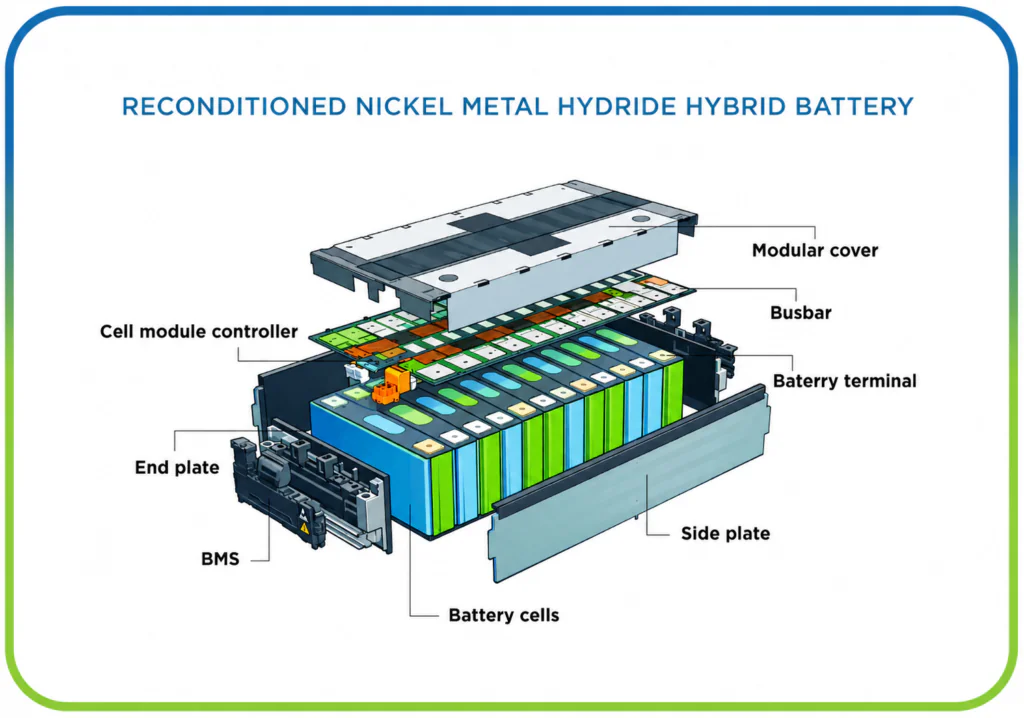
Nickel Metal Hydride (NiMH) battery technology is widely used in hybrid electric vehicles due to its proven reliability, durability, and safety. NiMH batteries store and release energy through electrochemical reactions between nickel-based and hydrogen-absorbing materials.
In hybrid applications, NiMH batteries are designed for frequent charge and discharge cycles rather than long-range energy storage. They work alongside the internal combustion engine and electric motor to support acceleration, enable low-speed electric operation, and capture energy through regenerative braking.
This technology provides consistent power output, reliable performance across varying operating conditions, and a long history of automotive use.
Specifications
Details
Optimal Temperature Range
Operating Temperature Range
Weather Performance – High Heat
Weight
Anticipated Life Span
Reserve Power
Safety
Cost
Warranty Coverage
Programming
Form Factor
New Module Sodium (NMS) Hybrid Battery
Technology: Sodium Cell Chemistry
Technology Overview
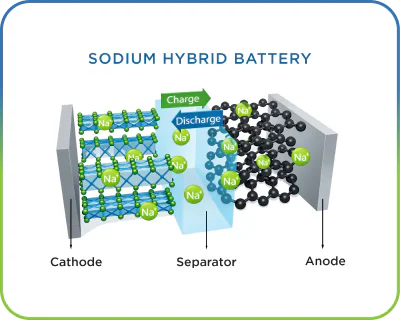
Sodium-based battery technology represents an advanced alternative for hybrid vehicle applications, offering a chemistry that does not rely on lithium or nickel-based materials. These batteries store and release energy through sodium-ion electrochemical processes, providing a stable and efficient energy solution for hybrid systems.
In hybrid applications, sodium batteries are engineered for frequent charge and discharge cycles, supporting acceleration, low-speed electric driving, and regenerative braking. They prioritize safety, performance, and long-term durability, making them well suited for extended vehicle ownership. Sodium hybrid applications withstand NIMH’s number 1 enemy, “High Heat” and are excellent at withstanding extreme cold and high heat.
Specifications
Details
Optimal Temperature Range
Operating Temperature Range
Weather Performance – High Heat
Weight
Anticipated Life Span
Reserve Power
Safety
Cost
Warranty Coverage
Programming
Form Factor
Lithium Battery Technology
Technology: Lithium Battery Technology
Technology Overview
Lithium-based battery technology is the foundation of modern hybrid and fully electric vehicles (EVs). Compared to older battery chemistries, lithium batteries offer higher energy density, faster charging, and improved efficiency — making them ideal for automotive electrification.
What Is Lithium Battery Technology?
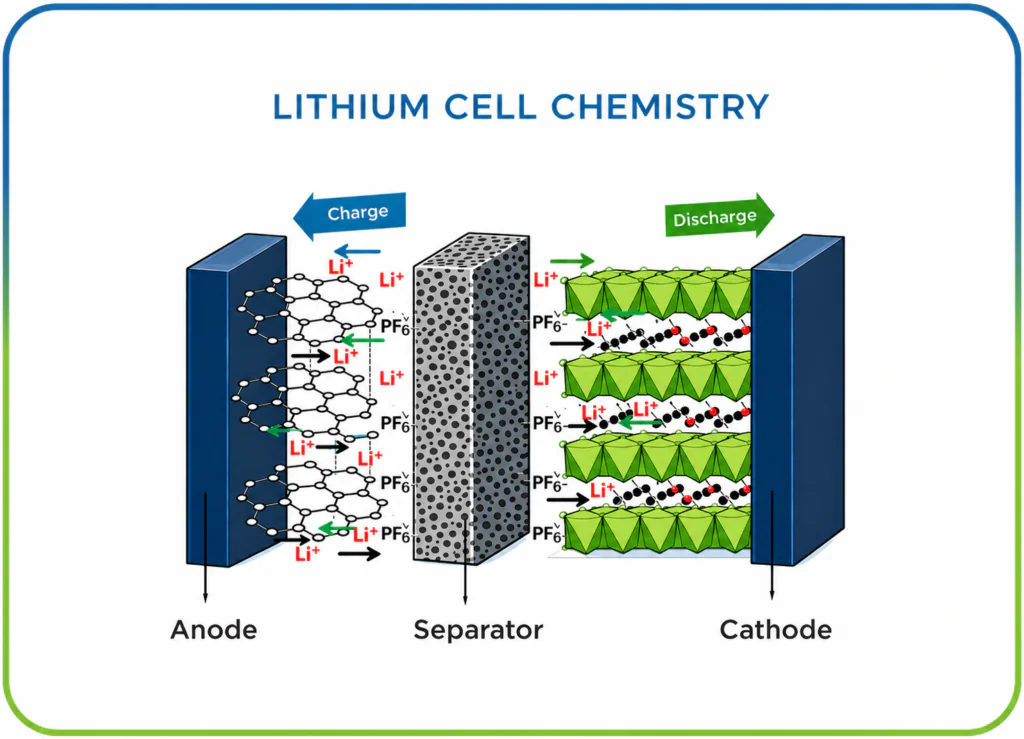
Lithium batteries store and release energy through the movement of lithium-ions between two electrodes:
- Anode (typically graphite)
- Cathode (varies by chemistry)
- Electrolyte (allows ion movement)
During charging and discharging, lithium ions move back and forth, creating a controlled flow of electricity.
Today, Lithium Batteries Are Used in Two Primary Vehicle Categories:
- Hybrid Electric Vehicles (HEVs) & Plug-In Hybrid Electric Vehicles (PHEVs)
- Fully Electric Vehicles (BEVs)
While the underlying lithium technology is similar, the design and performance requirements differ between these applications.
Common Lithium Chemistries Used in EVs
- Lithium-Ion (Li-ion) – High energy density and efficiency.
- Lithium Iron Phosphate (LFP) – Emphasizes durability and stability.
- Lithium Nickel Manganese Cobalt (LNMC) – Balances performance and range.
- Lithium Nickel Cobalt Aluminum (LNCA) – Optimized for high energy density.
Lithium Batteries in Hybrid Vehicles
Hybrid vehicles combine a gasoline engine with a lithium battery and electric motor. In these systems, the lithium battery assists with acceleration, supports electric operation at low speeds, captures energy through regenerative braking, and helps reduce fuel consumption and emissions.
Plug-In Hybrid Electric Vehicles (PHEVs)
PHEVs use larger lithium battery systems that allow for extended electric-only driving and external plug-in charging, while retaining a gasoline engine for longer trips.
Lithium Batteries in Fully Electric Vehicles
Fully electric vehicles rely entirely on lithium battery systems for propulsion. These batteries power the electric motor, onboard electronics, and climate systems, playing a central role in vehicle performance, driving range, and charging capability.
Specifications
Details
Optimal Temperature Range
Operating Temperature Range
Weather Performance – High Heat
Battery Management Systems (BMS) that actively monitor temperature
Anticipated Life Span (New)
150,000–300,000+ miles, depending on usage
Safety Features
Battery Management Systems (BMS)
Continuous monitoring of voltage, temperature, and current
Overcharge and deep-discharge protection
Cell balancing
Air or liquid thermal management systems

Programming
New Module Prismatic (NMP) Hybrid Battery
Technology: Nickel Metal Hydride (NiMH)
Technology Overview
Nickel Metal Hydride (NiMH) battery technology has a long and proven history in hybrid electric vehicles, valued for its reliability, durability, and inherent safety. NiMH batteries store and release energy through electrochemical reactions involving nickel-based and hydrogen-absorbing materials, making them well suited for automotive hybrid systems.
Prismatic NiMH modules feature a rectangular form factor that allows for efficient packaging and consistent performance within hybrid battery assemblies. This design supports stable power delivery and dependable operation across a wide range of driving conditions, making it a practical and proven solution for long-term hybrid vehicle use.
Specifications
Details
Optimal Temperature Range
Operating Temperature Range
Weather Performance – High Heat
Weight
Anticipated Life Span
Reserve Power
Safety
Cost
Warranty Coverage
Programming
Form Factor
New Module Cylindrical (NMC) Hybrid Battery
Technology: Nickel Metal Hydride (NiMH)
Technology Overview
Nickel Metal Hydride (NiMH) battery technology is widely used in hybrid electric vehicles due to its proven reliability, durability, and safety. In hybrid applications, NiMH batteries are engineered for frequent charge and discharge cycles, supporting acceleration, low-speed electric operation, and regenerative braking.
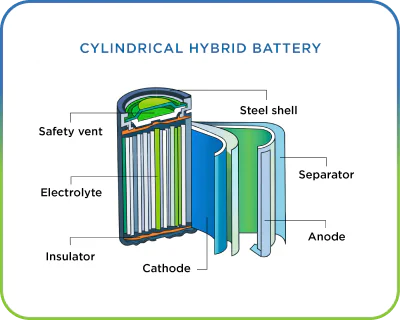
Cylindrical NiMH modules use a round cell design that provides efficient thermal performance and consistent power distribution within the battery assembly. This form factor has a long history in hybrid systems and is recognized for stable operation and dependable performance over time.
Specifications
Details
Optimal Temperature Range
Operating Temperature Range
Weather Performance – High Heat
Weight
Anticipated Life Span
Reserve Power
Safety
Cost
Warranty Coverage
Programming
Form Factor
Get in Touch With Us!
What Our Clients Say About Us
Discover the experiences of our satisfied customers! Read their testimonials to learn how our services have made a positive impact on their daily lives.
“Excellent company and product. Original replacement battery was installed within 3 days of request in 2020 (lifetime warranty). Battery lasted 5+ years. Replacement was installed within *2 days* of when I put in warranty claim, no questions asked. Car is running great again. Technicians were friendly, efficient, and informative both times.”
Steve H.
Marketing Manager
“had a fantastic experience dealing with Green Bean Battery, and specifically with Matt. He was an absolute pleasure to work with from start to finish.”
Steve H.
Marketing Manager
“Green Bean was quick and efficient! They answered all my questions before I purchased the battery and scheduled my appointment within the promised 3–4 week period. Matt replaced the old battery with the new one in just about an hour. Thank you to the Green Bean team!”
Steve H.
Marketing Manager