
I
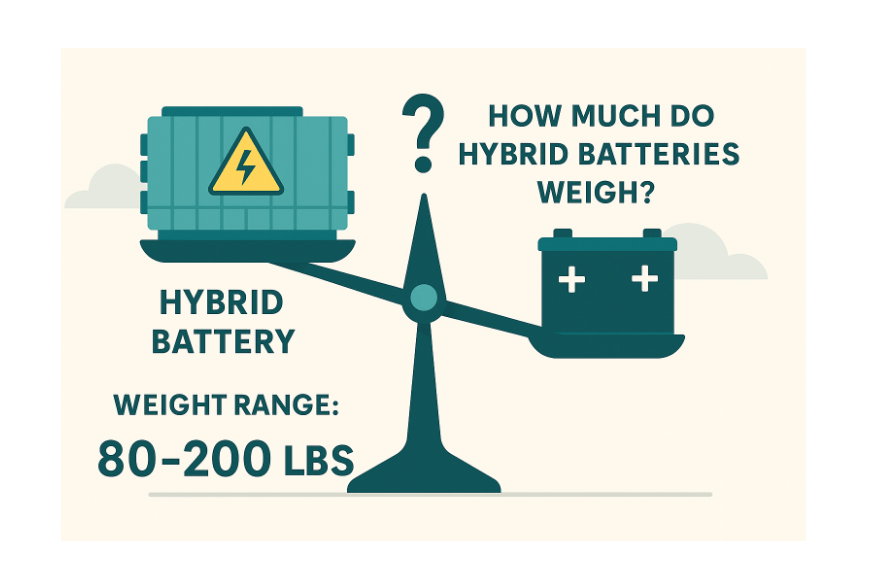
Below are typical weight ranges for the most common hybrid vehicles serviced at Green Bean Battery. Actual weights can vary depending on model year, battery chemistry, and the battery technology selected.
Important: Battery weight varies significantly based on module design. Compared to an original equipment (OE) nickel-metal hydride (NiMH) battery:
- Reconditioned batteries are typically the same weight as OE.
- Cylindrical batteries are approximately 5% lighter than OE.
- Prismatic batteries are approximately 10% heavier than OE.
- Sodium batteries are approximately 33% lighter than OE, providing the largest weight reduction of any option currently available.
A lighter battery can help reduce overall vehicle weight while maintaining the performance required by the hybrid system.
Why Some Hybrid Batteries Are Heavier Than Others
Several factors influence hybrid battery weight:
1. Battery Chemistry and Module Design
Nickel-Metal Hydride (NiMH)
- The original battery chemistry used in many Toyota, Lexus, Honda, and Ford hybrids.
- Known for reliability and longevity.
- Serves as the baseline weight for most hybrid battery comparisons.
Cylindrical Batteries
- Approximately 5% lighter than OE NiMH batteries.
- Deliver performance comparable to a new OE hybrid battery.
- Often offer improved longevity compared to traditional reconditioned options.
Prismatic Batteries
- Approximately 10% heavier than OE NiMH batteries.
- Built with new modules that provide performance comparable to a new factory battery.
- A popular option for drivers looking for long-term reliability and value.
Sodium Batteries
- Approximately 33% lighter than OE NiMH batteries, making them the lightest option available.
- Offer 29% more reserve power than an OE hybrid battery.
- Feature lower internal resistance (approximately 15 milliohms compared to roughly 28 milliohms in many NiMH batteries), helping improve efficiency and power delivery.
- Provide strong temperature performance across a wide operating range and excellent resistance to corrosion.
- With an anticipated lifespan of 5-7 years, sodium technology is becoming an attractive choice for drivers planning to keep their vehicle for the long term.
2. Vehicle Size
SUVs and AWD hybrids require greater electric motor support and higher energy capacity, which generally results in heavier battery packs.
3. Cooling System Design
Batteries with additional cooling channels, sensors, and reinforced enclosures naturally weigh more.
4. Voltage and Capacity
Higher-voltage battery systems require additional modules and components, increasing overall pack weight.
Is a Heavier Battery Better?
Not necessarily. Weight alone does not determine battery performance or longevity. What matters most is:
- Battery health
- Module balance
- Cooling system efficiency
- Battery technology
- Warranty coverage
In fact, newer battery technologies can offer significant advantages despite weighing less. For example, sodium-based batteries are approximately 33% lighter than OE NiMH batteries while also providing more reserve power and a longer expected lifespan, making them an excellent option for drivers seeking a modern replacement solution. Learn more about the battery technology we offer here.
Need a hybrid battery? Get your quote today!